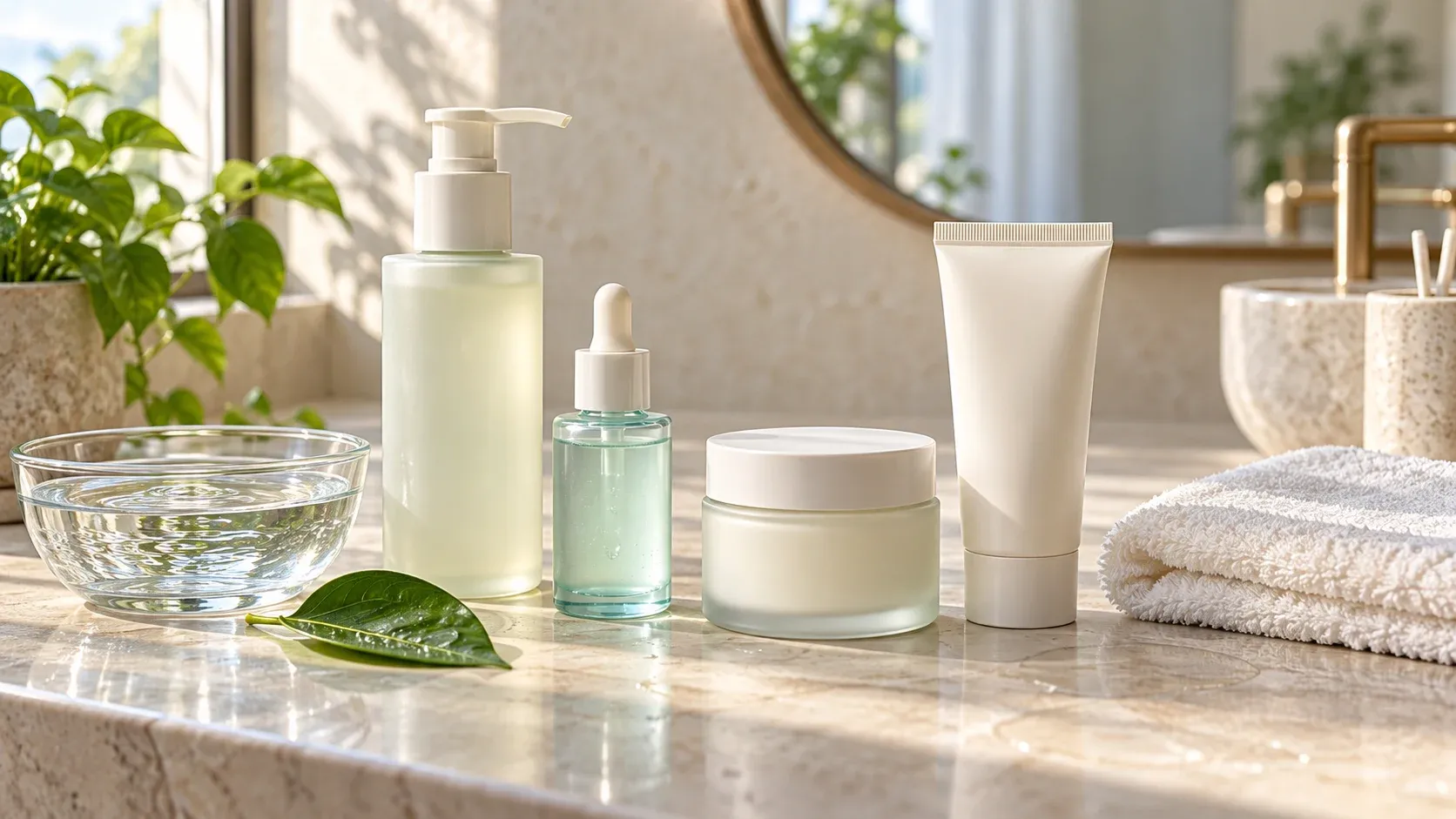
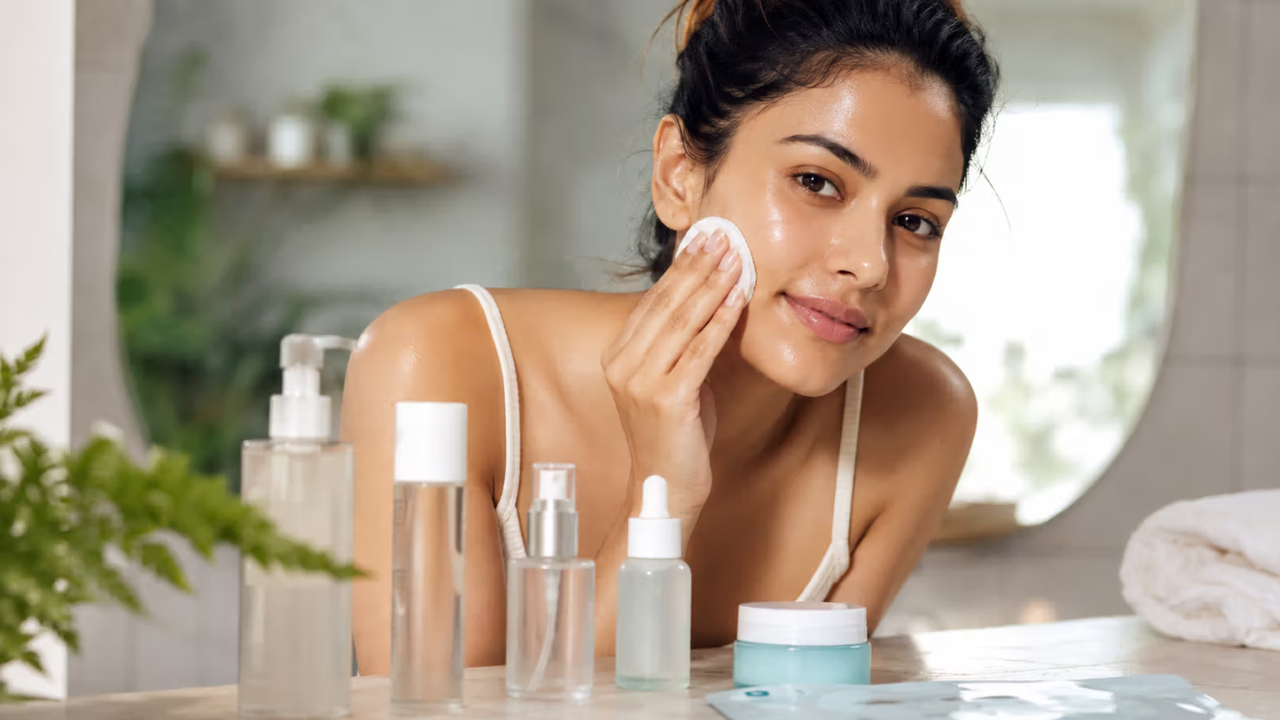
A Simple Skincare Routine for Beginners
Start with the essentials and learn how to build a core routine without overcomplicating product choices.
Start typing to filter articles, ingredients, and guides...
Discover thoughtful skincare advice, everyday rituals, ingredient insights, and practical skin tips to help you care for your skin with confidence and clarity.
Honoring skin texture and barrier biology over perfectionism.
In a beauty market crowded with 12-step routines and miraculous promises, we advocate for quiet precision. Understanding your unique barrier chemistry, skin environment, and realistic formulations matters far more than trends.
Tightness, flaking, and dullness caused by moisture loss and lipids deficit.
Excess sebum production, T-zone shine, and balancing hydration without heaviness.
Congested pores, inflammation, and soothing acne-prone skin with targeted actives.
Post-inflammatory hyperpigmentation, sun spots, and gentle brightening strategies.
Flushing, stinging, barrier compromise, and minimal allergen formulation guidelines.
Rough patches, enlarged pores, and chemical exfoliation best practices.
Learn how to choose a non-stripping cleanser suited to your skin pH and avoid unnecessary barrier irritation.
Understand the difference between water hydration and lipid moisturization, layering humectants onto damp skin.
Explore daily broad-spectrum sun protection basics to prevent UV damage and premature collagen breakdown.
Explore commonly used skincare ingredients, what they do, and what to consider before introducing them into your routine.
Simplifying skincare by stripping back over-exfoliation, avoiding conflicting active ingredients, and developing a routine grounded in individual epidermal needs.
Practical knowledge for the questions that come up every day.
Start with the essentials and learn how to build a core routine without overcomplicating product choices.
Understand why lipid matrix health matters and how gentle, minimalist care supports natural recovery.
Learn how daytime protection strategies differ from nighttime repair focused nourishment.
Explore patch testing methods, gradual frequency scaling, and recognizing early signs of irritation.
Deconstruct broad-spectrum terminology, PA ratings, organic vs mineral filters without panic.
Separate common social media claims from evidence-informed dermatological wisdom.
Fact: Oily skin can still be dehydrated (lacking water). Skipping moisturizer causes the skin to overcompensate by producing even more sebum. Lightweight, non-comedogenic gel-creams work best.
Fact: Natural essential oils and botanical extracts are frequent culprits for contact dermatitis and allergic sensitivities. Synthetic molecules in lab settings are often more stable and safer for sensitive skins.
Fact: Layering too many active ingredients (acids, retinoids, vitamin C) damages the skin moisture barrier, leading to redness, breakouts, and hypersensitivity. Simplicity yields sustainable skin health.
Select your parameters to generate an educational baseline routine outline.
*Educational framework only. Patch test new products on the inner arm for 48 hours prior to facial application.
Observe changes thoughtfully, give formulations time to work, and seek board-certified dermatological advice for persistent inflammatory skin conditions.
Limit core daily steps to cleansing, hydrating, moisturizing, and sun protection before adding targeted treatments.
Track environmental shifts, stress, diet, and product swaps to pinpoint genuine skin triggers accurately.
Epidermal cellular turnover takes 28 to 40 days. Avoid switching formulas every week expecting immediate miracles.
flawlessskintip was founded to bridge the gap between complex dermatological research and realistic daily beauty routines. We champion clarity, evidence-informed ingredient guides, and calm routines.
An independent beauty editorial committed to realistic skin barrier education.
At flawlessskintip, we believe skincare education should be tranquil, honest, and grounded in anatomical reality. In an age of viral beauty hacks and aggressive 10-step exfoliation routines, we offer a calm sanctuary of evidence-informed advice.
Most skincare writing is built to sell something β a serum, a gadget, a philosophy of self-optimization. We are not. This journal exists to explain how skin actually works, what ingredients genuinely do at the concentrations they are sold in, and why so many routines fail not from a lack of products but from an excess of them.
We write for the reader who has already tried the trends and wants something quieter: a clear explanation of the stratum corneum, a straight answer about retinoids, a realistic account of what a moisturizer can and cannot do. Our standard is simple β if we would not tell it to a friend sitting across a kitchen table, we do not publish it.
Every article prioritizes stratum corneum barrier preservation over aggressive resurfacing.
We do not demonize synthetic chemicals or use toxic fearmongering tactics.
Pores are normal anatomy, skin texture is natural, and aging is a graceful physiological process.
We explain concentrations, pH requirements, and potential side-effects with transparent nuances.
Where a product is mentioned, it is named because it illustrates a principle β never because a brand paid for the placement. Editorial judgment is not for sale, and any future partnership would be disclosed plainly at the top of the page.
We begin with primary literature and clinical guidelines β peer-reviewed dermatology journals, consensus statements, and published ingredient data β rather than with other beauty articles.
Where a formula's texture, wear, or layering behavior matters, we use it ourselves for a minimum of four weeks before describing how it performs on real skin in real conditions.
Every claim is qualified by its context β concentration, pH, formulation, frequency of use. "Gentle" and "clinically proven" mean very little on their own, so we say what the evidence actually supports and where it runs out.
Skin science moves. When a consensus shifts, we update the relevant article and note the revision rather than quietly deleting the old advice.
I started this journal after years of reading skincare advice that assumed the reader wanted to be sold something. I wanted the opposite: writing that respects your intelligence, your time, and your skin as it already is. If a single article here helps you use fewer products with more confidence, it has done its job.
β The Editor, flawlessskintip
flawlessskintip is an educational magazine publication. Content on this site is not medical advice, diagnosis, or treatment. Always consult a board-certified dermatologist for clinical conditions such as severe cystic acne, rosacea, or eczema.
Explore the journal's latest entries, or write to us with a question β we read every note, and we answer the ones we can.
Return to the Journal βUnderstand the underlying causes behind common epidermal reactions.
Most skin frustration comes from mistaking one condition for another β treating dehydration as dryness, or irritation as acne. This index breaks down the six concerns readers ask about most, what each one actually is at the level of the skin, and the ingredient categories worth considering. Use it as a starting point for understanding, not as a diagnosis.
Dry skin lacks oil (sebum), whereas dehydrated skin lacks water. Addressing dryness requires occlusives and lipid replenishment.
Hyper-active sebaceous glands can lead to clogged pores. Gentle BHA exfoliation and niacinamide help regulate pore clarity.
Flushing and stinging indicate a disrupted lipid barrier. Soothing centella, ceramides, and panthenol help restore balance.
Accumulated dead corneocytes and slow cell turnover create a dull, uneven surface. Gentle chemical exfoliation and consistent moisturizing smooth the terrain without stripping it.
Post-inflammatory marks and sun-driven melanin clusters respond best to daily broad-spectrum SPF paired with gradual-acting actives like vitamin C, tranexamic acid, or azelaic acid.
Collagen and elastin decline gradually with age and UV exposure. Retinoids, peptides, and consistent photoprotection support skin structure over years, not weeks.
These two terms are used interchangeably in marketing and almost never should be. They describe different problems and call for different responses.
| Dry Skin | Dehydrated Skin | |
|---|---|---|
| What's missing | Oil / lipids (sebum) | Water content |
| How it feels | Tight, flaky, rough patches | Dull, tight after cleansing, fine lines that appear then fade |
| Skin type or state | A skin type β relatively constant | A temporary state β can affect any skin type |
| Helpful ingredients | Ceramides, squalane, shea, occlusive balms | Hyaluronic acid, glycerin, panthenol, humectant layers |
| What to avoid | Harsh foaming cleansers, high-alcohol toners | Over-exfoliation, hot water, long cleansing |
Before reaching for an ingredient, observe. A few days of simple pattern-reading tells you more than any quiz.
Tightness immediately after cleansing points to dehydration or an overly stripping cleanser. Shine returning within an hour points to oil activity. Both together can occur at once.
Congestion concentrated along the T-zone is often sebum-driven. Flaking along the cheeks and jaw more often reflects dryness or barrier disruption.
Stinging, flushing, or itching within minutes of a product is a signal to stop, not to "push through." Barrier irritation compounds with repetition.
Introduce one new product every two to four weeks. If a reaction occurs, you will know its source. If everything changes at once, you will not.
This index is educational. It is intended to help you describe what you are experiencing with more precision, not to replace professional assessment. If a concern is persistent, painful, or spreading, a board-certified dermatologist is the right next step β and a far more efficient one than another round of trial-and-error.
Skin type is not a verdict β it is a starting position. This guide explains how each type behaves at the level of sebum, water, and barrier function, and which ingredient categories tend to suit it. Most people are a blend of two types, and most types change with season, age, and climate.
Dry skin (alipidic skin) produces less natural sebum than normal skin. Consequently, it lacks the essential lipids needed to retain moisture and build a strong shield against environmental stressors.
Note: dryness is a skin type β relatively constant. If tightness appears only after cleansing and fades, you may be dehydrated rather than dry.
Oily skin (lipid skin) has overactive sebaceous glands, producing excess sebum that can pool in pores and contribute to congestion, shine, and breakouts. It is not a flaw β sebum is protective and oily skin often ages more slowly β but it benefits from regulation rather than stripping.
Note: shine returning within an hour of cleansing is a normal sign of oil activity, not a failure of your routine.
Combination skin is the most common type β an oily T-zone (forehead, nose, chin) alongside normal or dry cheeks. It behaves like two skins sharing one face, so it responds best to a zoned approach rather than a single all-over routine.
Note: combination skin often shifts with the seasons, becoming drier in winter and oilier in summer.
Sensitive skin reacts more readily to products, temperature, and friction β often with stinging, flushing, or itching. It is less a skin type than a state of barrier reactivity, which means it can improve substantially with patient, minimal care.
Note: persistent redness, swelling, or pain warrants a dermatologist's assessment β barrier care is not a substitute for clinical diagnosis.
How the four types differ on the measures that matter most when choosing products.
| Type | Sebum | Water Retention | Typical Priority |
|---|---|---|---|
| Dry | Low | Low | Lipid replenishment |
| Oily | High | Normal | Pore regulation |
| Combination | Mixed | Mixed | Zoned care |
| Sensitive | Variable | Variable | Barrier calm |
A short map of the ingredient categories that appear most often in the guides above.
Glycerin, hyaluronic acid, panthenol. Draw water into the upper layers. Best applied on damp skin and sealed afterward.
Squalane, jojoba, fatty alcohols. Soften and smooth the surface, filling the gaps between corneocytes.
Petrolatum, shea butter, dimethicone. Form a film that slows water loss. Most useful for dry skin and nighttime.
Ceramides, cholesterol, centella, colloidal oat. Help rebuild and soothe a compromised lipid barrier.
Skin type guides are tools for orientation, not labels. Your skin is a living system that shifts with weather, hormones, medication, and stress. Reassess every few months, and trust what your skin is telling you over what a chart says it should be.
Science-backed breakdowns of key cosmetic actives and emollients.
An ingredient list tells you what is in a formula. It does not tell you whether it will do anything β that depends on concentration, pH, formulation, and how often you use it. This lab covers the actives and emollients readers ask about most, what the evidence supports, and where the marketing outruns the data.
Binds up to 1,000 times its weight in water to hydrate outer epidermal layers.
View Full Profile βMulti-tasking antioxidant that strengthens barrier lipids and regulates sebum production.
View Full Profile βOil-soluble beta hydroxy acid that penetrates pores to exfoliate dead cells and clarify sebum.
View Full Profile βNaturally occurring lipids that make up roughly half the stratum corneum. They fill the spaces between corneocytes and are depleted by over-exfoliation and harsh cleansing.
View Full Profile βA vitamin A derivative that accelerates cell turnover and supports collagen over months of use. Requires a slow introduction β two nights weekly to start β and daily sunscreen alongside.
View Full Profile βNeutralizes free radicals and supports collagen synthesis. L-ascorbic acid is the best-studied form but needs a low pH and careful formulation; derivatives are gentler but less potent.
View Full Profile βA lightweight, skin-identical lipid that softens the surface and slows water loss without heaviness. Suits most skin types, including oily skin, when used sparingly.
View Full Profile βThe most reliable and best-studied humectant in cosmetics. Inexpensive, well-tolerated, and effective at low concentrations β often the unsung hero of a formula.
View Full Profile βThe smallest alpha hydroxy acid, allowing deep penetration and effective surface exfoliation. Potent but more irritating than lactic acid; best introduced slowly and never layered with retinoids.
View Full Profile βA botanical extract traditionally used for wound healing, now common in barrier-repair formulas. Modest evidence for reducing redness and supporting recovery during reactive periods.
View Full Profile βOne of the most effective occlusives available, reducing water loss by over 98% in some studies. Frequently maligned for its texture rather than its safety β well tolerated by nearly all skin types.
View Full Profile βA dicarboxylic acid with evidence for reducing post-inflammatory marks and mild rosacea redness. Gentler than most pigmentation actives and usable during pregnancy.
View Full Profile βA quick comparison of the most commonly discussed actives β what they do, who suits them, and what to watch for.
| Ingredient | Primary Function | Best Suited To | Watch For |
|---|---|---|---|
| Retinol | Turnover & collagen support | Most types; slow introduction | Purging, irritation, sun sensitivity |
| Vitamin C | Antioxidant & brightening | Most types; morning use | Stinging on compromised skin |
| Salicylic Acid | Pore exfoliation | Oily, congested, combination | Overuse; dryness at high frequency |
| Glycolic Acid | Surface resurfacing | Normal to oily; resilient skin | Irritation, photosensitivity |
| Niacinamide | Barrier & sebum regulation | Most types; well tolerated | Rare flushing at very high % |
| Azelaic Acid | Pigmentation & redness | Sensitive, rosacea-prone | Mild tingling in first weeks |
A higher percentage on the label rarely means a better result. In several cases, more of an active means more irritation and no additional benefit.
Evidence supports benefits from roughly 2β5%. Formulas above 10% offer no proven additional benefit and are more likely to cause flushing in sensitive skin.
0.5β2% is the effective range for leave-on products. Higher percentages in washes add little, since contact time is short. Overuse matters more than strength.
10β20% L-ascorbic acid at pH below 3.5 is the well-studied range. Beyond that, irritation rises without clear extra benefit. Stability matters more than percentage.
0.1β0.3% is a realistic starting point; 0.5β1% is strong. Formula delivery and consistency of use matter far more than chasing the highest number available.
Water is a chemical. So is every ingredient with a name. The phrase carries no safety meaning and is often used to imply risk where none exists.
Pore size is largely genetic. Products can make pores appear smaller by keeping them clear and reducing surrounding inflammation, but no topical changes their structural size.
A phrase with no standard definition. It may refer to a well-designed trial or to a small internal study by the brand. Ask what was tested, on whom, for how long, and against what.
Ingredients are listed in descending order of concentration up to 1%, after which order is arbitrary. A "hero" ingredient featured on the front of the box may appear near the end of the list β present, but in a quantity unlikely to do much. Formulation, pH, and packaging stability usually matter more than any single number.
Primary humectant used for superficial and deep epidermal hydration.
Hyaluronic Acid is a naturally occurring glycosaminoglycan found throughout the skin's connective tissue. In skincare formulations, it acts as a magnet for water, drawing hydration from damp air or underlying tissue into the stratum corneum.
Always apply Hyaluronic Acid serums to slightly damp skin (after cleansing or misting) and follow immediately with a sealant cream to lock in the water.
Water-soluble vitamin that supports barrier function, sebum balance, and tone.
Niacinamide is the amide form of vitamin B3 and a precursor to NAD, a coenzyme central to cellular energy. In skin, it increases ceramide production, reduces transepidermal water loss, and has a modest regulatory effect on sebum β which is why it appears in formulas for both dryness and congestion. It also inhibits the transfer of melanin to surface cells, giving it a gradual brightening role.
Nearly all skin types. It is one of the few actives that is both well-tolerated and genuinely multi-functional, which makes it a reasonable first active for someone building a routine.
Apply to clean skin morning or evening, before heavier creams. If you experience temporary flushing, reduce frequency or move to a lower percentage rather than abandoning the ingredient entirely.
Rare flushing and warmth at very high concentrations, more common in sensitive skin. No significant photosensitivity, and it pairs without conflict with most other actives.
Oil-soluble beta hydroxy acid used to clarify pores and reduce congestion.
Salicylic acid is a BHA, meaning it is lipid-soluble and can travel through sebum into the pore lining β something water-soluble AHAs cannot do. There it loosens the bonds between dead corneocytes, helping to clear impactions and reduce the environment that supports congestion. It also has mild anti-inflammatory properties.
Oily, congested, and combination skin. It is less suited to dry or reactive skin at high frequency, where it can compound barrier dryness.
Begin with two to three evenings per week on clean, dry skin. Do not layer with retinoids on the same night at the outset β alternate instead. Always follow with sunscreen the next morning.
Overuse causes dryness, flaking, and increased sensitivity. Not recommended during pregnancy in leave-on form; consult a clinician.
Structural lipids that form the mortar of the skin barrier.
Ceramides are a family of waxy lipids that make up roughly half the lipid content of the stratum corneum. They sit between corneocytes β the "bricks" of the skin β forming the mortar that holds the barrier together and limits water loss. Barrier disruption depletes ceramides, which is why they appear in nearly every serious barrier-repair formula.
All skin types, and especially anyone recovering from over-exfoliation, harsh cleansing, or a reactive period. Also useful during winter and for anyone using retinoids.
Apply as the moisturizing step, morning and evening, over any hydrating serum. During a reactive period, ceramide creams can serve as the entire routine alongside a gentle cleanser and SPF.
Very well tolerated. No meaningful photosensitivity and no conflicts with other actives.
Vitamin A derivative used for cell turnover and long-term structural support.
Retinol is converted in the skin first to retinaldehyde, then to retinoic acid β the active form that binds retinoid receptors and influences gene expression. The visible result is faster cell turnover, improved texture, and over time, measurable support for collagen production. Because conversion takes place in the skin, retinol is gentler and slower than prescription tretinoin.
Most skin types with a patient introduction. Useful for texture, fine lines, and congestion. Dry and sensitive skin may prefer a lower strength, a buffer layer of moisturizer, or a gentler ester such as retinyl palmitate.
Apply at night, on clean dry skin, two nights per week to begin. Build to every other night over a month or two. Use a pea-sized amount for the whole face. Follow with a ceramide cream. Do not layer with AHAs or BHAs on the same night initially.
Expect a temporary purge in the first four to six weeks. Photosensitivity is real β daily sunscreen is non-negotiable. Not recommended during pregnancy; consult a clinician.
Antioxidant used to neutralize free radicals and support collagen synthesis.
L-ascorbic acid is a water-soluble antioxidant that donates electrons to neutralize free radicals generated by UV and pollution. It is also a required cofactor for the enzymes that cross-link collagen molecules, which is why consistent use is associated with improved tone and firmness over time. Its effectiveness depends heavily on formulation β pH and stability matter as much as percentage.
Most skin types, applied in the morning beneath sunscreen. Sensitive skin may prefer a derivative (sodium ascorbyl phosphate, magnesium ascorbyl phosphate, or tetrahexyldecyl ascorbate), which are gentler but less potent.
Apply in the morning to clean skin, before moisturizer and sunscreen. Store away from light and heat. If the formula turns deep orange or brown, it has oxidized and is no longer effective.
Can sting on compromised or sensitive skin. Avoid layering directly with strong acids or high-strength retinoids at the same time of day until tolerance is established.
Lightweight emollient identical to a lipid the skin produces naturally.
Squalane is the hydrogenated form of squalene, a lipid the skin produces as part of its sebum. Because it is skin-identical, it is unusually well tolerated. It works as an emollient β filling the spaces between corneocytes β and slows water loss without the heaviness of a traditional oil. Modern cosmetic squalane is typically derived from sugarcane or olives rather than shark liver.
All skin types, including oily skin when used sparingly. Particularly useful for dry patches, winter dryness, and as a final sealing step over a moisturizer.
Warm two to three drops between the palms and press into the skin as the last step before SPF or bed. Use sparingly on oily areas; more generously on dry ones.
Very well tolerated. Non-comedogenic for most, though very oil-prone skin may prefer a water-based alternative in summer.
The most reliable and best-studied humectant in cosmetic chemistry.
Glycerin is a small polyol that draws water into the stratum corneum from the deeper layers of the skin and from the surrounding air. It is present in the skin naturally as part of the natural moisturizing factor (NMF) and is one of the few ingredients with decades of supporting research. It also supports the activity of enzymes involved in corneocyte maturation.
Virtually all skin types, including sensitive and acne-prone skin. It is often the unsung hero of a formula β present at low percentages, doing quiet work beneath the "headline" ingredient.
Apply to slightly damp skin, and follow with a product containing lipids (ceramides or squalane) to seal in the water it has drawn.
Exceptionally well tolerated. In extremely low humidity, high-glycerin formulas can feel tacky or draw moisture from the skin rather than the air β a humectant is most useful when sealed.
Smallest alpha hydroxy acid, used for surface exfoliation and texture refinement.
Glycolic acid is an AHA with the smallest molecular size of the family, which allows it to penetrate more readily than lactic or mandelic acid. It loosens the bonds between dead corneocytes in the upper stratum corneum, encouraging exfoliation and revealing smoother skin beneath. The trade-off for that efficiency is a higher irritation potential than gentler AHAs.
Normal to oily, resilient skin focused on texture and dullness. Less suitable for sensitive, rosacea-prone, or dry skin, where lactic or mandelic acid is usually a better starting point.
Begin once per week at night. Do not layer with retinoids, other AHAs, or BHAs on the same evening. Follow with a gentle moisturizer and use sunscreen every morning without exception.
Significant photosensitivity; overuse causes stinging, redness, and barrier disruption. Not recommended during pregnancy in leave-on form; consult a clinician.
Soothing botanical traditionally used for wound healing and barrier recovery.
Centella asiatica is a plant whose extracts contain triterpenoid compounds β asiaticoside, madecassoside, asiatic acid, and madecassic acid. These are associated with anti-inflammatory effects and support for wound healing in traditional medicine, and have been adapted into modern barrier-repair formulas. Evidence in skincare is meaningful but more modest than for well-studied actives like niacinamide.
Reactive, sensitive, or barrier-compromised skin; anyone recovering from over-exfoliation. Also useful as a soothing companion to retinoid use.
Use as a serum or cream layer, morning and evening, during a reactive period. It is mild enough to layer with most other products without conflict.
Very well tolerated. As a botanical extract, patch-testing is prudent for anyone with known plant sensitivities. Not a substitute for clinical care of persistent redness or rosacea.
Highly effective occlusive used to reduce transepidermal water loss.
Petrolatum forms a hydrophobic film on the skin surface that slows water loss to an unusual degree β reductions of 98% or more have been measured in controlled settings. It is biologically inert, does not penetrate deeply, and is not comedogenic in refined cosmetic grade. It is one of the most studied and most reliable occlusives available, and its reputation for heaviness is about texture rather than safety.
Dry, very dry, and compromised skin; anyone recovering from a barrier disruption. Also useful on dry patches within otherwise combination skin, and in overnight "slugging" routines.
Apply as the very last step of an evening routine, over a moisturizer. A thin layer is enough. On oily or acne-prone skin, use on dry patches only rather than the full face.
Cosmetic grade is safe and well tolerated. The main consideration is texture β it can feel heavy, and some prefer a squalane-based occlusive for daytime. Always patch-test if you are new to petrolatum.
Gentle acid with evidence for pigmentation and redness, including mild rosacea.
Azelaic acid is a naturally occurring dicarboxylic acid produced by yeast on healthy skin. In topical form it has three distinct effects: it inhibits tyrosinase (reducing excess melanin production), it has antibacterial activity against C. acnes, and it demonstrates anti-inflammatory effects that make it useful for rosacea-prone skin. It is one of the few ingredients with supporting evidence across pigmentation, acne, and redness simultaneously.
Sensitive, rosacea-prone, and pigmentation-prone skin. Also a useful option for anyone who cannot tolerate retinoids or hydroquinone, and one of the few actives considered compatible with pregnancy.
Apply once daily to start, on clean dry skin, before moisturizer. Build to twice daily if tolerated. Results for pigmentation are gradual β expect eight to twelve weeks of consistent use.
Mild tingling or itching in the first week or two is common and usually fades. If irritation persists, reduce frequency or strength rather than abandoning it. Still, persistent or painful redness should be assessed by a clinician.
A methodical breakdown of daily skin maintenance.
A routine is not a checklist to complete β it is a rhythm you can sustain. The sequences below describe the order in which products are most effective, and the reasoning behind each position. They are deliberately short. If a step is not doing something the others cannot, it does not belong in the routine.
Rinse with lukewarm water or use a gentle, low-foaming cleanser to preserve overnight lipid barrier generation.
Apply a hydrating serum (Vitamin C or Niacinamide) to neutralize free radicals from UV exposure.
Apply 1/4 teaspoon of broad-spectrum SPF 30+ to face and neck as the final protective step.
For dry or dehydrated skin, apply a light moisturizer beneath sunscreen. For oily skin, the sunscreen itself may be sufficient.
Morning is about defence. Nothing new is introduced to the skin here β only what helps it face the day.
Use an oil-based cleanser first to break down sunscreen and makeup, followed by a gentle water-based cleanser.
Apply treatments (such as Retinoids or Exfoliating Acids) on clean, dry skin 2-3 nights per week.
Seal in hydration with a ceramide-rich moisturizer to support overnight tissue repair.
On very dry patches, a thin layer of squalane or balm over the moisturizer slows overnight water loss without heaviness elsewhere.
Evening is about repair. This is where actives belong β never stacked, never rushed.
Products go on thinnest to thickest, water-based before oil-based. This is not arbitrary β it determines whether each layer can actually reach the skin.
| Position | Product Type | Why Here |
|---|---|---|
| 1 | Cleanser | Nothing absorbs through sunscreen or makeup film |
| 2 | Actives / Treatments | Best applied to bare, dry skin for even delivery |
| 3 | Hydrating Serum | Water-based layers go under anything oil-based |
| 4 | Moisturizer | Traps the water layers beneath it |
| 5 | Facial Oil / Occlusive | Seals everything; oils can block water-based absorption if applied earlier |
| 6 | Sunscreen (AM only) | Always last β nothing goes on top of it |
Not everything belongs in a daily routine. Actives work best on a schedule that gives the barrier time to recover between applications.
Cleanser, moisturizer, sunscreen. These are the only steps that genuinely belong every day for most people.
Chemical exfoliants (BHA/AHA) and retinoids. Start with one night per week and build slowly β the schedule matters as much as the product.
Spot treatments, masks, clay on oily zones, a richer cream on dry patches. Responsive, not habitual.
Almost always the cleanser, not a missing product. Switch to something non-foaming and lower in alcohol before adding anything new.
Retinoids can cause a temporary purge in the first four to six weeks. Breakouts in new locations, or with burning, usually indicate irritation instead β reduce frequency.
A sign of barrier disruption. Pause all actives for one to two weeks, keep to cleanser, moisturizer, and SPF, then reintroduce one at a time.
Check consistency before changing products. Most ingredients need eight to twelve weeks of regular use. If the routine is consistent and nothing shifts, then reassess the product.
Cleanse gently, moisturize consistently, wear sunscreen daily, and introduce actives slowly. Everything else in a routine is optional refinement. A short routine done every day will outperform an elaborate one done occasionally β every time.
All published articles, interviews, and ingredient breakdowns.
Every entry here is written to answer a question we have actually been asked β or one we once asked ourselves. No trend cycles, no launch announcements, no sponsored conclusions. Read in any order; each piece stands alone.
The stratum corneum is roughly the thickness of a sheet of paper β and nearly every skincare complaint traces back to it. A plain-language tour of what it is, what damages it, and what actually helps it recover.
Read Featured Article βWhy "repair" creams work β and when they can't.
The difference between a purge and a reaction.
How to read an ingredient list past the 1% line.
Why stripping back your morning routine can heal chronic redness and sensitivity.
The visible signs of a stripped barrier, and the four to six weeks it takes to rebuild it.
Why the higher number on the bottle is rarely the better product β and what to look for instead.
Cleanser, moisturizer, SPF. Why this unglamorous trio outperforms most elaborate routines.
A conversation about purging, patience, and why "gentle" beats "strong" for most people.
Where the ritual came from, why it spread, and the reasons it rarely serves the skin it claims to.
A water problem and an oil problem need different answers β and most people are treating one as the other.
What actually happens at week two, week eight, and month six β including the parts no one mentions.
Small, seasonal changes β a richer cream, a lighter gel β rather than an entirely new shelf of products.
Articles are updated when consensus shifts, and revisions are noted at the top of the piece rather than quietly overwritten. If something you read here no longer reflects current thinking, we would rather correct it than remove it.
Published by flawlessskintip editorial team
In an industry driven by novel product launches and elaborate multi-step routines, the most radical act for your skin barrier is often restraint. Over-cleansing and layering multiple exfoliating acids can weaken the stratum corneum, leaving it vulnerable to environmental damage.
The instinct to add is understandable. When skin feels tight, we reach for a richer cream. When it looks dull, we add an exfoliant. When a breakout appears, we add a spot treatment on top of the acid already in the routine. Each decision makes sense in isolation, but together they create a pattern of constant intervention β and skin, unlike a spreadsheet, does not respond well to more inputs.
What follows is not an argument against skincare. It is an argument for a smaller, more deliberate version of it β one built around what the barrier actually needs rather than what the shelf looks like.
βWhen we stop over-treating the skin and allow its native acid mantle to normalize, inflammation drops drastically.β
The stratum corneum β the outermost layer of skin β is roughly the thickness of a sheet of paper. It consists of flattened cells embedded in a lipid matrix of ceramides, cholesterol, and fatty acids, and it maintains an acidic surface pH of around 4.5 to 5.5. That acidity is not incidental. It supports the enzymes that build barrier lipids and suppresses the bacteria associated with acne and irritation.
Frequent cleansing with foaming surfactants, repeated acid exfoliation, and hot water all push that pH upward and dissolve the lipids holding the barrier together. The visible consequences appear in a predictable order: tightness after cleansing, then stinging when products are applied, then flaking, then redness, and finally a paradoxical combination of oiliness and dryness as sebum production rises to compensate for the water being lost.
At that point, adding more products usually makes things worse. The skin is not lacking intervention. It is lacking recovery time.
When skin is reactive, the two approaches diverge sharply β not only in what they include, but in what they ask of the skin itself.
| Approach | Typical Routine | What It Asks of the Skin |
|---|---|---|
| More | Cleanser, toner, essence, two serums, acid, moisturizer, oil, SPF | Constant adaptation to new inputs; no time to recover |
| Less | Cleanser, moisturizer, SPF β with one active introduced slowly | Predictability; the barrier can stabilize and repair |
A minimalist routine is not the same as no routine. It is a smaller set of products chosen because each one does something the others cannot. For most people, that means:
That is the entire routine. What it lacks in novelty it makes up for in consistency, and consistency is the only thing skin reliably rewards. The actives that do real work β retinoids, exfoliating acids, vitamin C β still have a place. They simply belong in a stable routine rather than stacked on top of a reactive one.
Simplifying is the right first response to tightness, stinging, or diffuse redness. Give it four to six weeks before judging the result β barrier recovery is not fast, and the first week can feel worse before it feels better. But if redness is concentrated, painful, or accompanied by swelling or a persistent rash, simplifying is not a substitute for assessment. A board-certified dermatologist can identify what is actually happening far more efficiently than another round of trial and error.
Doing less is not an aesthetic. It is a strategy. The skin is a living system with its own repair mechanisms, and most of what we call a "routine" is better understood as either supporting those mechanisms or interrupting them. Everything this journal recommends starts from one question: does this help the skin do what it already knows how to do? If the answer is no, it does not belong in the routine.
Published by flawlessskintip editorial team
Exfoliation is one of the few skincare categories with a clear, visible payoff β smoother texture within days, brighter tone within a week. That immediacy is exactly what makes it easy to overdo. The damage accumulates quietly, and by the time the signs appear, the barrier has usually been compromised for weeks.
This article describes what over-exfoliation looks like in sequence, why it is so often mistaken for a product "not working," and what recovery actually requires. It is written for anyone who has ever added a second acid because the first one seemed to stop delivering.
βThe skin that looks the most 'polished' is often the one that has been thinned the most. Those are not the same thing.β
Chemical exfoliants work by loosening the bonds β desmosomes β that hold dead corneocytes together, allowing the oldest cells to shed. Used at the right frequency, this supports the natural turnover cycle of roughly 28 days. Used too often, it removes cells that were not yet ready to leave, exposing younger skin that has not fully formed its protective lipid envelope.
The result is a stratum corneum that is thinner, less lipid-rich, and more permeable. Water escapes more easily, irritants penetrate more deeply, and the acid mantle drifts upward from its ideal pH. Skin does not read this as exfoliation. It reads it as injury.
The symptoms tend to appear in a fairly predictable order over several weeks:
| Stage | Visible Sign | What's Happening |
|---|---|---|
| Early | Slight stinging when applying products | Barrier lipids beginning to deplete |
| Developing | Tightness after cleansing; mild flaking | Water loss increasing; turnover disrupted |
| Established | Diffuse redness; sensitivity to products previously tolerated | Inflammatory response to barrier breach |
| Late | Oily yet flaky skin; breakouts in new locations | Compensatory sebum production alongside dehydration |
The most common response to the early stages is to increase frequency. The reasoning feels sound: if twice weekly is good, four times must be better. But the stinging and flaking are not signs that the product is finally working β they are signs that the barrier is losing ground. Doubling down accelerates the damage, and the resulting breakouts are then misread as "the acid is purging," which invites even more exfoliation.
Purging is a specific phenomenon: it happens in the first four to six weeks of a retinoid or exfoliant, and it occurs only in areas where congestion already existed. Breakouts appearing in new locations, or accompanied by burning and tightness, are almost always irritation β a different problem with a different solution.
Barrier recovery is not complicated, but it is not fast. The typical timeline is four to six weeks, and the first week often feels worse before it feels better.
None of this argues against exfoliation. Chemical exfoliants remain genuinely useful for texture, congestion, and dullness in skin that can tolerate them. The point is that they are a tool with a cost, and the cost is barrier integrity. The question is not whether to exfoliate but how often, at what strength, and for how long before reassessing. For most skin, the honest answer is: less often than the internet suggests, and more slowly than feels satisfying.
The skin that looks the most polished is often the one that has been thinned the most. Those are not the same thing. Real texture improvement comes from a barrier that is intact enough to keep renewing itself β and that requires rest as much as it requires effort.
Published by flawlessskintip editorial team
Niacinamide has become the most ubiquitous active in skincare β present in serums, moisturizers, cleansers, and even sunscreens. With that ubiquity has come a numbers race: 5% became 10%, then 15%, then 20%. The implicit promise is that more of a well-studied ingredient must mean more of its benefits. The evidence does not support that.
This article sets out what niacinamide actually does, what the study data says about concentration, and why the higher number on the bottle is rarely the better choice.
βAbove about 5%, the research does not show additional benefit β but it does show additional irritation risk.β
Niacinamide is the amide form of vitamin B3. In skin it serves as a precursor to NAD, a coenzyme involved in cellular energy metabolism. From that central role, several downstream effects follow:
These are real effects, supported by decades of research. What matters is that they are largely saturated at moderate concentrations β the pathways do not keep rewarding more input indefinitely.
The majority of clinical studies on niacinamide have used concentrations between 2% and 5%. Barrier improvement, sebum regulation, and brightening have all been demonstrated in that range. Studies at higher percentages have generally not shown additional efficacy on the same endpoints β and several have noted increasing rates of flushing, warmth, and stinging above 10%.
| Concentration | Evidence | Tolerability |
|---|---|---|
| 2% β 5% | Well-established for barrier, sebum, and tone | Excellent for most skin types |
| 5% β 10% | No additional proven benefit over 5% | Generally well tolerated; occasional flushing |
| Above 10% | No additional benefit in published literature | Higher rates of flushing and stinging, especially on compromised skin |
Numbers sell. A 20% formula has a clear marketing story, and the ingredient is inexpensive enough that the cost of raising it is minimal. What the label does not communicate is that at high percentages the formula may be more likely to trigger the exact sensitivity the user is trying to fix β and that the lower percentage would have done the same job without the risk.
There is also a formulation nuance: niacinamide is often paired with zinc and other actives in higher-strength products, so the irritation attributed to "20% niacinamide" may partly come from the overall formula rather than the vitamin alone.
Niacinamide is one of the few actives that is genuinely both multi-functional and well-tolerated. That makes it a reasonable first active for most people. But the percentage race has outstripped the evidence, and the number on the bottle is far less important than whether the formula suits your skin at the concentration it contains.
Published by flawlessskintip editorial team
If you stripped a skincare routine down to only what the research actually supports for general skin health, three products would survive: a gentle cleanser, a moisturizer, and a broad-spectrum sunscreen. Everything else β serums, essences, toners, ampoules, masks β is an optional refinement layered on top of that foundation.
This is not an argument that serums and actives are useless. It is an argument about priority. A person with a consistent three-product routine and no actives will generally have healthier skin after six months than a person with a twelve-step routine they abandon every few weeks because it feels like too much work.
βA short routine done daily will outperform an elaborate one done occasionally β every time.β
The remaining 10% is real, but it is specific. Actives like retinoids and exfoliating acids address genuine concerns β acne, texture, pigmentation, fine lines β that cleanser and moisturizer alone will not resolve. The question is not whether to use them but whether they should be the first thing you add.
For someone with a stable barrier and no pressing concerns, they can be. For someone whose skin is reactive, dry, or simply has not had a consistent foundation in months, they should not. The three-product routine is a foundation to build from, not a ceiling to stay under.
| Concern | First Active to Add | Frequency |
|---|---|---|
| Congestion, blackheads | Salicylic acid | 2β3 nights weekly |
| Dullness, uneven tone | Vitamin C (AM) or a gentle AHA | Daily (C) or 1β2x weekly (AHA) |
| Texture, fine lines | Retinol | Start 2 nights weekly |
| Redness, sensitivity | Nothing new yet β focus on barrier support first | β |
Skincare is not a hobby for most people. It is a small daily practice that supports a body system doing its own work. Three products used consistently cover the fundamentals. Anything beyond that should answer a specific question β not fill shelf space or follow a trend.
Published by flawlessskintip editorial team
Acne is the most common skin condition in the world, and also one of the most consistently misunderstood. The advice circulating online is often contradictory: strip the oil, then moisturize; use acids, then repair; avoid dairy, then avoid stress; be patient, but also buy this serum. We spoke with a board-certified dermatologist about what she wishes patients understood before they begin treatment.
Editor's note: This interview has been edited for length and clarity. The name of the dermatologist has been withheld at her request, as she is not authorized to speak on behalf of her practice.
βThe most common mistake I see is patience, or the lack of it. Acne treatment is a six-to-twelve week commitment, minimum.β
They come in having changed everything at once, or having changed nothing for too long. The first group has no idea which of the six products they added is helping. The second group has decided that nothing works because they tried one thing for two weeks and gave up. Both are treatable problems, but they add months to the process.
The other consistent issue is over-cleansing. People with oily or acne-prone skin often feel like they need to "dry out" the oil, so they use a strong cleanser twice or three times a day and skip moisturizer. That damages the barrier, which triggers more oil production, which feels like more acne. It is a loop.
Timing and location. Purging happens in the first four to six weeks of a retinoid or exfoliant, and it occurs where you already break out β the same places, just faster and more visibly. A reaction happens in new places, often with stinging, redness, or flaking alongside it, and it does not settle down after six weeks.
When I am unsure from a patient's description, I ask them to pause everything for two weeks. If it improves, we know it was irritation. If it stays the same, we know it was the skin's baseline and we can restart treatment at a lower frequency.
For topical treatment: six to twelve weeks before we can judge whether something is working. For hormonal or cystic acne, often longer β sometimes four to six months, and often in combination with oral treatment. For scarring, we are talking about prevention first and then treatment over years, not weeks.
The most common reason treatments fail is not the treatment itself. It is stopping at week four because the patient expected week twelve results.
The evidence is strongest for high-glycemic diets and, in some people, dairy β specifically skim milk. That does not mean everyone with acne needs to eliminate these. It means that if a patient is already doing the basics well and is not seeing progress, diet is worth discussing as a contributing factor rather than a primary cause.
I would rather see someone with a consistent routine and normal eating habits than an obsessive elimination diet and a shelf full of products. The first is sustainable; the second usually is not.
Sooner than most people do. If you have painful nodules, cysts, or any scarring, that is a reason to come in immediately β scarring is permanent, and time matters. If you have tried a consistent over-the-counter routine for three months without improvement, that is also a reason. And if a new regimen is causing burning, swelling, or a rash, stop and come in rather than pushing through.
That the basics still work. Gentle cleansing, a moisturizer your skin tolerates, sunscreen daily, one active introduced slowly, and patience. That is the foundation. Everything else is refinement. If you can do those five things consistently for three months, you will know much more about your skin than any online quiz can tell you.
Acne treatment is not a mystery to solve but a process to sustain. The medical tools available are effective when used correctly and patiently, and most of what goes wrong is a failure of consistency rather than a failure of products. If something is not improving after three months of genuine consistency, that is useful information β and a reason to see someone who can assess the next step more precisely than the internet can.
Published by flawlessskintip editorial team
The ten-step routine was not invented by dermatologists. It emerged from a specific cultural moment β the rise of Korean beauty in Western markets in the 2010s β and it was shaped as much by commerce as by skin science. That does not make it worthless. It does mean it deserves the same scrutiny we apply to any other claim.
This article is not an argument that every product beyond three is superfluous. It is an argument that the number of steps has become a proxy for how seriously someone takes their skin, and that the equation does not hold up.
βA routine is not more serious because it is longer. It is more serious because it is consistent.β
Korean beauty routines have historically emphasized hydration layering, gentle cleansing, and protection β principles that Western skincare has since adopted widely. But the ten-step structure was a translation for a new market, and it was flattened into a single narrative that conflated a general philosophy with a specific product count.
The result was a routine that many people followed faithfully without understanding which steps mattered, which were optional, and which were actively working against their skin. It also created the conditions for ingredient stacking β multiple acids, multiple actives, multiple essences β that many barriers could not sustain.
The issue is not the number of steps per se. It is three specific failure modes that the ten-step format encourages:
| Routine | Steps | Time | Realistic Adherence |
|---|---|---|---|
| Ten-step | 10 | 20β30 min | Often abandoned within weeks |
| Five-step | 5 | 10 min | Generally sustainable |
| Three-step | 3 | 5 min | Frequently maintained for years |
The best parts of the ten-step philosophy are worth keeping. Layering hydration is genuinely useful for dehydrated skin. Gentle cleansing is better than harsh cleansing. Double cleansing at the end of a day with sunscreen and makeup is real. The mistake is treating the framework as fixed rather than as a set of principles to apply selectively.
A routine is a tool, not a demonstration of commitment. The question worth asking about any step is not "does this fit in a ten-step sequence?" but "does this do something for my skin that the other products do not?" If the answer is no, the step is optional β and optional is often the most honest category in skincare.
Published by flawlessskintip editorial team
Dryness and dehydration are used interchangeably in beauty marketing and almost never should be. They describe different problems at the level of the skin, they feel different to the person experiencing them, and β most importantly β they call for different responses. Treating one as the other is one of the most reliable ways to make either worse.
This article unpacks the distinction, explains how to tell which one you are dealing with, and outlines what actually helps each.
βDryness is a skin type. Dehydration is a state. You cannot change your type, but you can resolve the state.β
Dry skin lacks oil β specifically, it produces less sebum than normal skin. Sebum is the lipid mixture that, along with ceramides and cholesterol, forms the barrier that holds water in. Without enough of it, the barrier is structurally weaker and water escapes more easily.
Dehydrated skin lacks water. The sebum production may be normal or even high, but the water content of the stratum corneum is below where it should be. This can happen to any skin type, at any age, in any season β oily skin can absolutely be dehydrated, and frequently is.
| Dry | Dehydrated | |
|---|---|---|
| Missing | Oil / lipids | Water |
| Feels like | Tight, rough, flaky patches; may persist all day | Tight after cleansing, dull, fine lines that appear then fade |
| Skin type or state | A type β constant | A state β temporary, can affect any type |
| Helps | Ceramides, squalane, shea, occlusives | Humectants: glycerin, HA, panthenol β sealed with a lipid |
| Avoid | Foaming cleansers, alcohol-heavy toners, harsh exfoliants | Over-exfoliation, hot water, long cleansing, alcohol |
The symptoms overlap substantially. Both can cause tightness, dullness, and a rough appearance. Both worsen in winter and in air-conditioned environments. Both are frequently blamed on the wrong thing, because the most visible symptom β flaking β is attributed to dryness even when the underlying cause is a disrupted water balance.
The most reliable way to distinguish them is timing. Dryness persists throughout the day and does not improve much with a single hydrating layer. Dehydration tends to be worst immediately after cleansing, improves temporarily with a humectant, and returns when the water evaporates.
Many people are both dry and dehydrated β dry as a type, dehydrated as a current state. In that case, address the dehydration first: gentle cleansing, humectant layering, and a moderate cream. Once the water balance stabilizes, focus on lipid support. Trying to do both at once with an elaborate routine usually results in neither being solved.
The language matters because the solution depends on it. A person using a rich cream for dehydration will feel temporary relief and no lasting change, because the problem is water, not oil. A person using a hydrating serum for dryness will feel brief improvement that disappears within an hour, because the water it drew in has nowhere to stay. Match the response to the actual problem, and the improvement tends to come faster than expected.
Published by flawlessskintip editorial team
Retinol is one of the most studied cosmetic actives available, and also one of the most frequently abandoned. The reason is rarely that it does not work β it is that the first six to eight weeks can feel like the opposite of working, and most people are not warned about it clearly enough to continue.
This is a week-by-week account of what actually happens when you start retinol, what is normal, what is not, and how to make it to the point where the results appear.
βThe results appear at month three. The decision to continue happens at week three. That gap is where most people quit.β
Retinol is converted in the skin first to retinaldehyde, then to retinoic acid β the form that binds retinoid receptors and changes how skin cells behave. The visible effects are faster cell turnover, improved texture, and over months, measurable support for collagen production. Because conversion happens in the skin, retinol is gentler and slower than prescription tretinoin.
| Period | What You May See | What to Do |
|---|---|---|
| Week 1β2 | Mild tingling; possibly slight flaking | Continue at 2 nights weekly; keep a ceramide cream nearby |
| Week 3β4 | Purging begins β breakouts in existing congestion zones | Do not increase frequency; do not add other actives |
| Week 5β8 | Purging may peak; skin may feel dry or tight | Hold the schedule; use a richer moisturizer if needed |
| Month 3 | Purging settles; texture begins to smooth | Consider increasing to every other night if comfortable |
| Month 6+ | Visible improvement in tone, texture, and fine lines | Maintain nightly or near-nightly use; keep SPF daily |
Purging is a specific, temporary phenomenon: breakouts in areas where congestion already existed, starting within the first four to six weeks, resolving over the following six to eight. Irritation is a different problem β stinging, redness, flaking, breakouts in new locations, or general discomfort.
If you are uncertain, the standard test is to pause for two weeks. Purging resolves when the active is paused and returns when it is resumed. Irritation resolves when paused and usually returns immediately if the frequency is not reduced. The response to the pause tells you which one you are dealing with.
It does not remove scars or replace lost volume. It does not substitute for sunscreen β in fact, it requires it more strictly. It does not work faster at higher strengths in the same timeframe; the results are the same over months regardless of starting percentage, but the irritation curve is steeper at higher strengths. And it does not work for everyone: a minority of people find it consistently irritating even at low percentages, and that is useful information rather than a failure.
Retinol rewards patience more directly than almost any other ingredient in skincare. The people who see results are not the ones who used the strongest formula β they are the ones who stayed at a tolerable frequency for long enough to get past the difficult middle. If you can commit to twelve weeks at a schedule your skin can handle, you will know whether it works for you. If you cannot, you are better off choosing a different active.
Published by flawlessskintip editorial team
Skin that feels balanced in June can feel tight and reactive in January, without a single product changing. The routine has not failed β the environment has. Cold air, indoor heating, and lower humidity pull water from skin more aggressively, while higher sebum production in heat does the opposite. Adjusting for the season is not complicated, but it does require noticing.
The good news: you do not need a new shelf of products. You need a few deliberate substitutions on the same foundation.
βA seasonal adjustment is a small edit to a stable routine β not a new routine in a different season.β
| Factor | Winter | Summer |
|---|---|---|
| Humidity | Lower (outdoor and indoor) | Higher, especially outdoors |
| Sebum | Typically lower | Typically higher |
| Barrier stress | High β dry air, hot showers | Moderate β UV, sweat, more cleansing |
| Main focus | Lipid support and sealing | Light hydration and sun protection |
The foundation does not change. Gentle cleansing, a moisturizer your skin tolerates, and daily sunscreen remain the three constants regardless of the season. If those three are stable, seasonal adjustments are small β a different texture, an added or removed step. If those three are not stable, adjusting for the season is not the first priority; getting the foundation right is.
A routine is not a fixed document. It is a live practice that responds to the environment and to what your skin is actually telling you. Adjusting for the season is one of the simplest ways to keep a routine working β not by adding more, but by recognizing when to shift the balance between water, oil, and protection.
Build a balanced, minimal routine tailored to your skin type and concerns.
Select your skin type and up to two concerns below. The generator returns a starting routine based on the principles in this journal β short, specific, and easy to sustain. It is a starting point, not a prescription.
None selected β that's fine. A basic routine is still a routine.
| Step | Frequency |
|---|
This routine is a starting point. Introduce one new product every two to four weeks, and give each change at least four to six weeks before evaluating it. If redness is persistent, painful, or spreading, this is not a substitute for a dermatologist's assessment.
We welcome reader feedback, editorial inquiries, and skin topics suggestions.
Last updated: January 2025
At flawlessskintip, accessible from our online portal, one of our main priorities is the privacy of our visitors. This Privacy Policy document contains types of information that is collected and recorded by flawlessskintip and how we use it.
We have written this policy in plain language, and we have tried not to include anything that does not reflect what the site actually does. If any part of it is unclear, you are welcome to write to us and ask.
This website utilizes standard browser Local Storage (localStorage) to manage newsletter subscription preferences (e.g. gd_newsletter_emails). This information resides strictly within your local client browser and is not sold, rented, or distributed to third-party data brokers.
Because this data is stored locally, it is unique to the browser and device you are using. It does not appear on other devices, and it is not accessible to us. If you clear your browser's site data, the stored records are removed with it.
flawlessskintip follows a standard procedure of using log files. These files log visitors when they visit websites. All hosting companies do this as part of hosting services' analytics. The information collected includes internet protocol (IP) addresses, browser type, Internet Service Provider (ISP), date/time stamp, and referring/exit pages.
These log files are not linked to any personally identifiable information, and they are used to analyze trends, administer the site, and gather broad demographic information. They are not used to track individual visitors across sites.
We do not deploy advertising cookies, cross-site trackers, or third-party analytics scripts on this site. Any storage used is strictly functional β it exists only to remember whether you have subscribed to the newsletter.
Some photography on this site is served from external image hosts. When those images load, the host may receive standard request information such as your IP address and browser type as part of normal web delivery. We do not share any additional information with them, and we do not control their independent privacy practices.
This site is not directed at children under 13, and we do not knowingly collect personal information from them. Since all newsletter data remains in local browser storage, no such information is transmitted to us in any case.
You retain full control over any data associated with this site. Clearing your browser's site data at any time will remove stored newsletter preferences. Because nothing is stored on our side, there is no separate deletion request to make.
We may update this policy from time to time to reflect changes in the site's functionality. The "last updated" date at the top of this page will reflect the most recent revision.
Questions about this policy can be directed to hello@flawlessskintip.com.
Last updated: January 2025
Welcome to flawlessskintip. By accessing or using this website, you agree to these terms of service. If you do not agree with any part of them, please do not use the site.
We have written these terms in plain language and have tried to reflect only what the site actually does. There is no e-commerce, no account system, and no data collection beyond what the Privacy Policy describes.
This website is provided for personal, non-commercial use. You may read, browse, and share links to the content freely. You may not reproduce, republish, or redistribute substantial portions of the site's text or design for commercial purposes without written permission.
You agree not to misuse the site β including attempting to interfere with its operation, inject malicious code, or scrape its content at volume using automated tools.
The name flawlessskintip, its editorial copy, article structures, and original design elements are the property of their respective owners. Third-party photography remains the property of its original creators and is used here for demonstration purposes only.
You are welcome to quote short passages with attribution and a link back to the original article. Wholesale republishing of articles is not permitted.
All content on this site is provided for general educational and informational purposes. It is not medical advice, diagnosis, or treatment, and it is not a substitute for consultation with a qualified dermatologist or physician.
You are responsible for assessing whether any product, ingredient, or routine described on this site is appropriate for your own skin and circumstances. See the Editorial & Skincare Disclaimer for the full notice.
This website is provided "as is" and "as available" without warranties of any kind, express or implied. We do not guarantee that the site will be uninterrupted, error-free, or free of inaccuracies, or that any information on it is complete or current.
Skincare science evolves. Articles are updated when consensus shifts, but we make no commitment to update every page on a fixed schedule.
To the fullest extent permitted by law, flawlessskintip and its contributors accept no liability for any direct, indirect, incidental, or consequential damages arising from your use of the site or reliance on its content.
This includes, without limitation, any reaction, irritation, or adverse outcome from following a routine, using an ingredient, or applying a product referenced on this site. Patch testing and professional consultation remain your responsibility.
This site may link to external resources for reference or context. We do not control those destinations and are not responsible for their content, claims, or privacy practices. Following an external link is not an endorsement of everything found there.
The newsletter form on this site stores the submitted email address locally in your browser under gd_newsletter_emails. No emails are actually sent through this demonstration site, and no address is transmitted to us or to any mailing service.
You can remove this record at any time by clearing your browser's site data. See the Privacy Policy for details.
Photography used on this site is served from external image hosts and is credited to its original creators where applicable. If you believe an image has been used incorrectly, please write to us and we will address it promptly.
We may revise these terms as the site evolves. The "last updated" date at the top of this page will reflect the most recent revision. Continued use of the site after changes are posted constitutes acceptance of the revised terms.
These terms are intended to be interpreted in a reasonable and good-faith manner. If any provision is found to be unenforceable, the remaining provisions will continue in full force and effect.
Questions about these terms can be directed to hello@flawlessskintip.com.
Last updated: January 2025
The information provided on flawlessskintip is intended for general educational, cosmetic knowledge, and informational purposes only.
We write about skincare because we find it genuinely interesting and because plain-language explanation is hard to find. Nothing on this site should be read as a promise of results, a guarantee of suitability, or a substitute for professional care.
The content is not intended to be a substitute for professional medical advice, diagnosis, or clinical treatment. Always seek the advice of your physician or a qualified dermatologist with any questions you may have regarding a medical skin condition (such as rosacea, severe acne vulgaris, psoriasis, or eczema).
If you are experiencing persistent pain, spreading redness, swelling, or a rash that does not resolve, please treat it as a reason to see a clinician rather than a reason to try another product.
Individual skin biology varies significantly. Always patch test cosmetic products on a small area of non-facial skin prior to full application. If irritation occurs, discontinue use immediately.
Patch testing is not a guarantee of tolerance β it is a way of catching obvious reactions before they affect the whole face. Introduce one new product at a time, and allow at least two to four weeks between additions.
Ingredient percentages and concentration ranges referenced on this site reflect published research and common formulation practice. They describe general patterns and are not a recommendation for any specific product. Formulas vary widely, and an ingredient's presence on a label does not guarantee its efficacy at that concentration.
This journal does not publish sponsored conclusions. Where a product is mentioned, it is named because it illustrates a principle β never because a brand paid for the placement. If a future partnership or affiliate arrangement is introduced, it will be disclosed plainly at the top of the relevant page.
Where this site links to external resources, we do not control and are not responsible for the content, claims, or practices of those destinations. Following an external link is not an endorsement of everything found there.
flawlessskintip accepts no liability for any direct or indirect consequences arising from the use of information on this site. You are responsible for assessing whether any product, routine, or ingredient described here is appropriate for your own skin and circumstances.
Questions about this notice can be directed to hello@flawlessskintip.com.
Get thoughtful skin tips, ingredient explainers, and new journal stories delivered straight to your inbox.